The World Cup Is The Greatest Community Event On Earth
The FIFA World Cup is the biggest football tournament in the world. Community Intelligence suggests it is something larger.
For one month, the World Cup transforms how millions of people gather, communicate, argue, celebrate and identify themselves.
It temporarily rearranges loyalties.
It expands communities beyond their usual boundaries.
It creates shared experiences at a scale few events can match.
Most importantly, it demonstrates how community behaviour changes when identity, emotion and belonging converge around a single cultural moment.
This report explores why the World Cup generates such extraordinary levels of participation and what it reveals about the mechanics of community itself.
Key Finding #1: The World Cup Creates Temporary Identity Transformation
For most of the year, football fans exist within club identities.
Arsenal supporters debate Tottenham supporters.
Liverpool supporters debate Manchester United supporters.
Club football is built upon rivalry.
The World Cup temporarily restructures those identities.
A Liverpool supporter and a Manchester United supporter may suddenly find themselves supporting the same team.
Club loyalties remain.
However, national identity temporarily becomes the dominant identity.
This creates a rare phenomenon.
Rather than fragmenting communities, the World Cup consolidates them.
Communities that would normally exist in opposition begin operating within a larger shared identity.
Related Framework: Identity Signals
Key Finding #2: The Tournament Generates Extraordinary Community Gravity
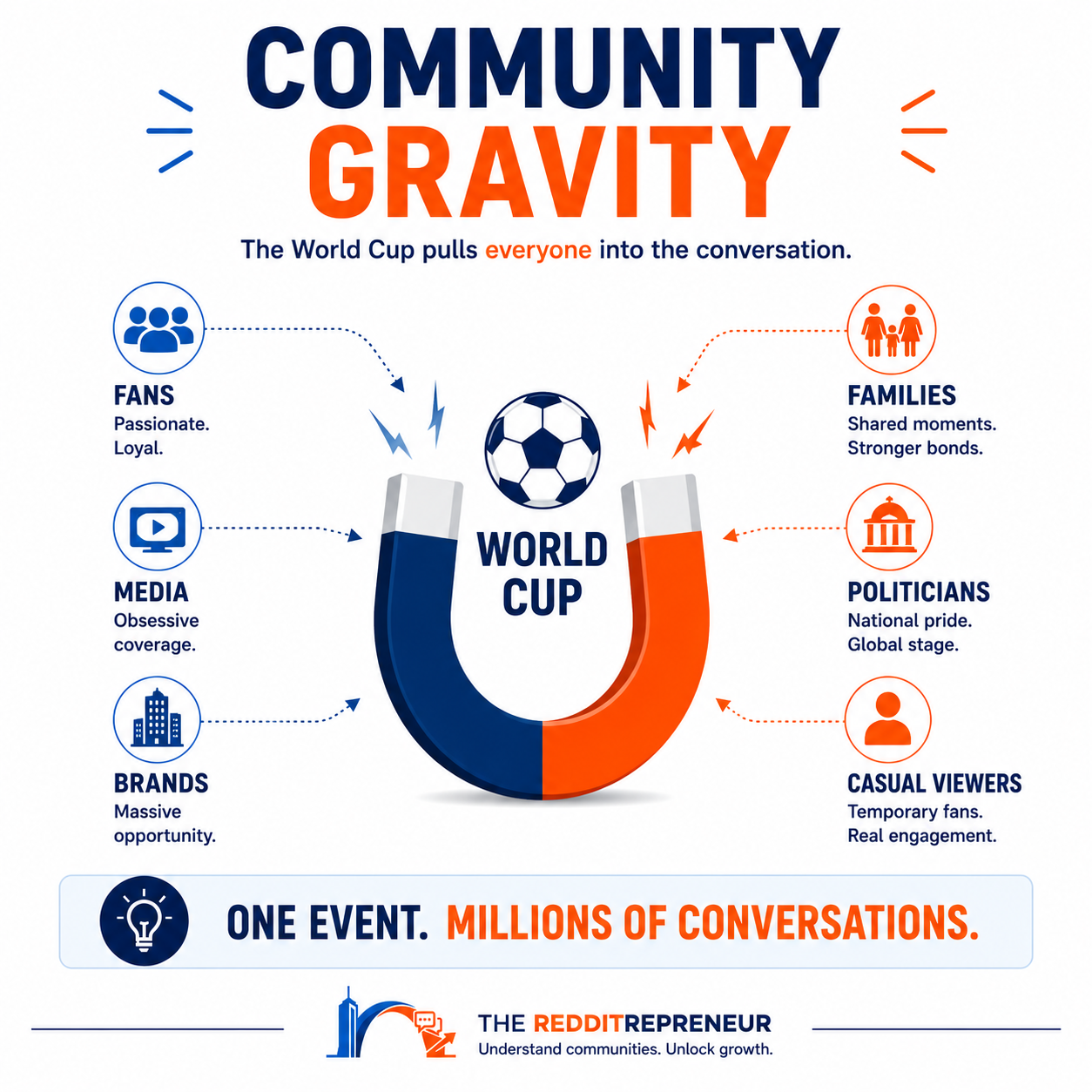
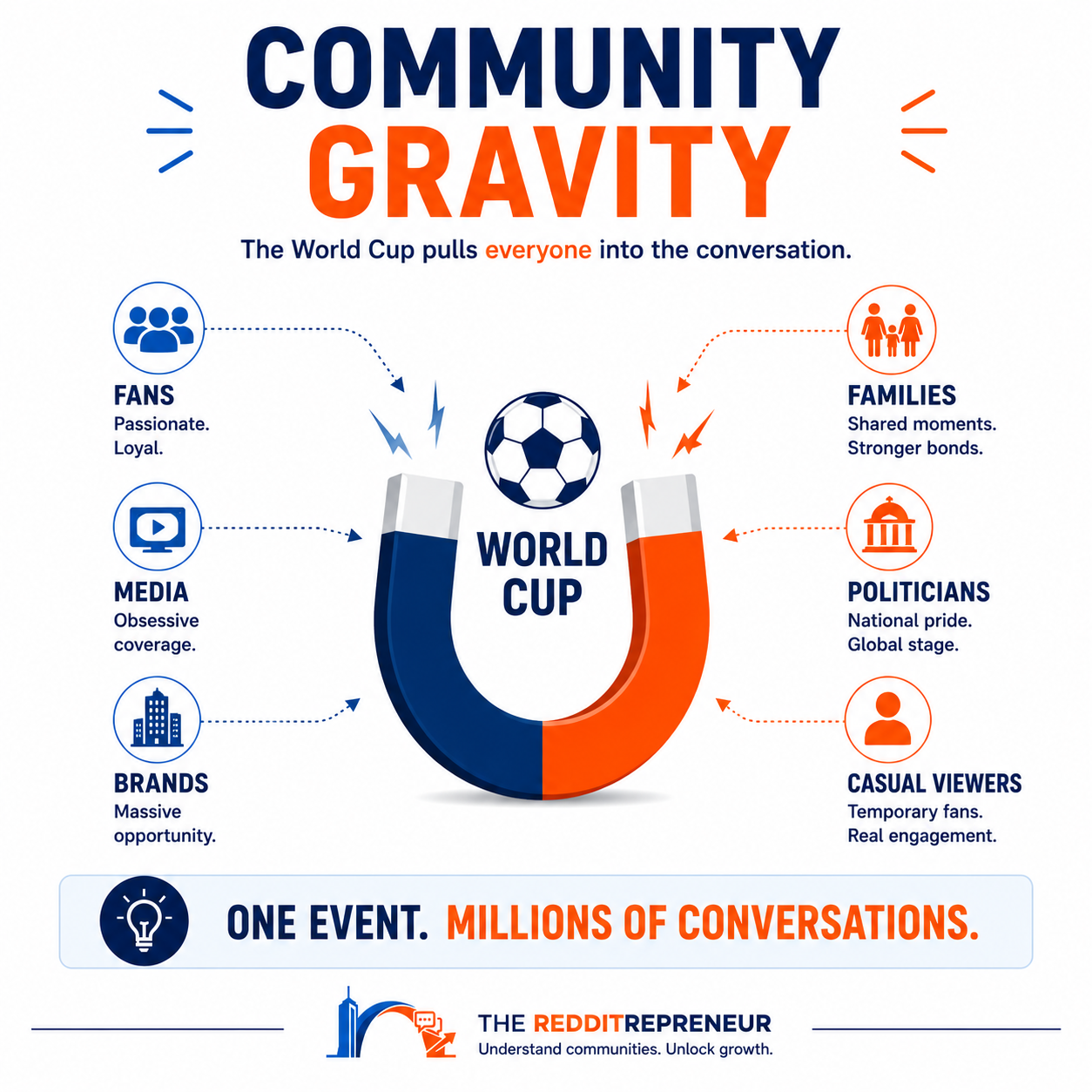
The World Cup attracts participation far beyond traditional football audiences.
It activates:
- Pride
- Hope
- Fear
- Belonging
- Nostalgia
- Rivalry
People who rarely watch football often become active participants during the tournament.
They discuss results.
They follow storylines.
They engage with friends, family and colleagues.
This is a classic example of high Community Gravity.
The event attracts not only core participants but also people who would normally remain outside the community.
The conversation becomes larger than the sport itself.
Related Framework: Community Gravity
Key Finding #3: Every Match Creates A Community Courtroom
The final whistle rarely ends the conversation.
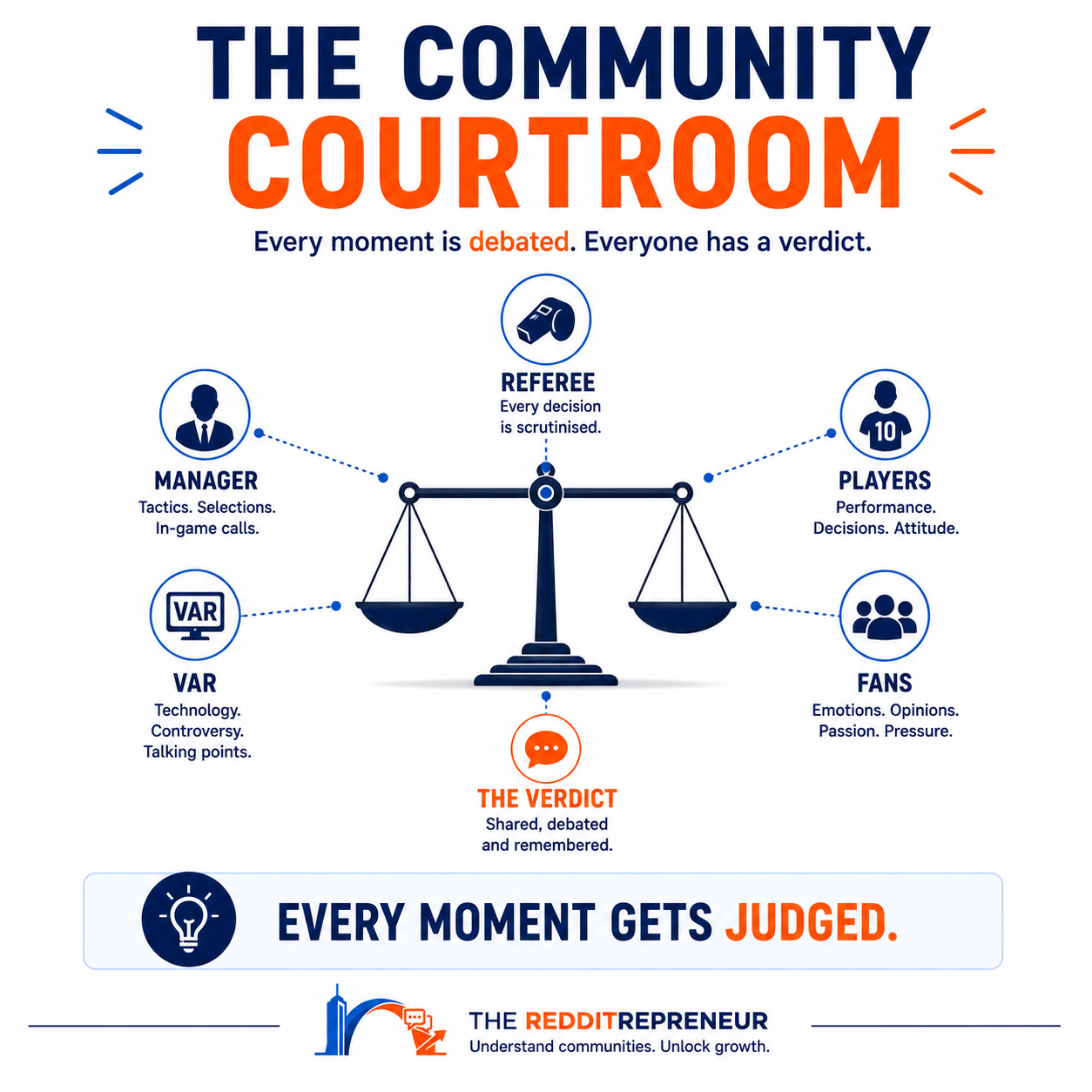
Every World Cup match creates an environment where decisions are collectively evaluated.
Managers are judged.
Players are judged.
Referees are judged.
Tactics are judged.
Supporters are judged.
</aside>
One missed penalty can become a national conversation.
One substitution can dominate media coverage for days.
The football match becomes evidence.
The community becomes the jury.
The result is an event that continues generating conversation long after the game has ended.
Related Framework: Community Courtroom
Key Finding #4: The World Cup Expands The Community Beyond Football
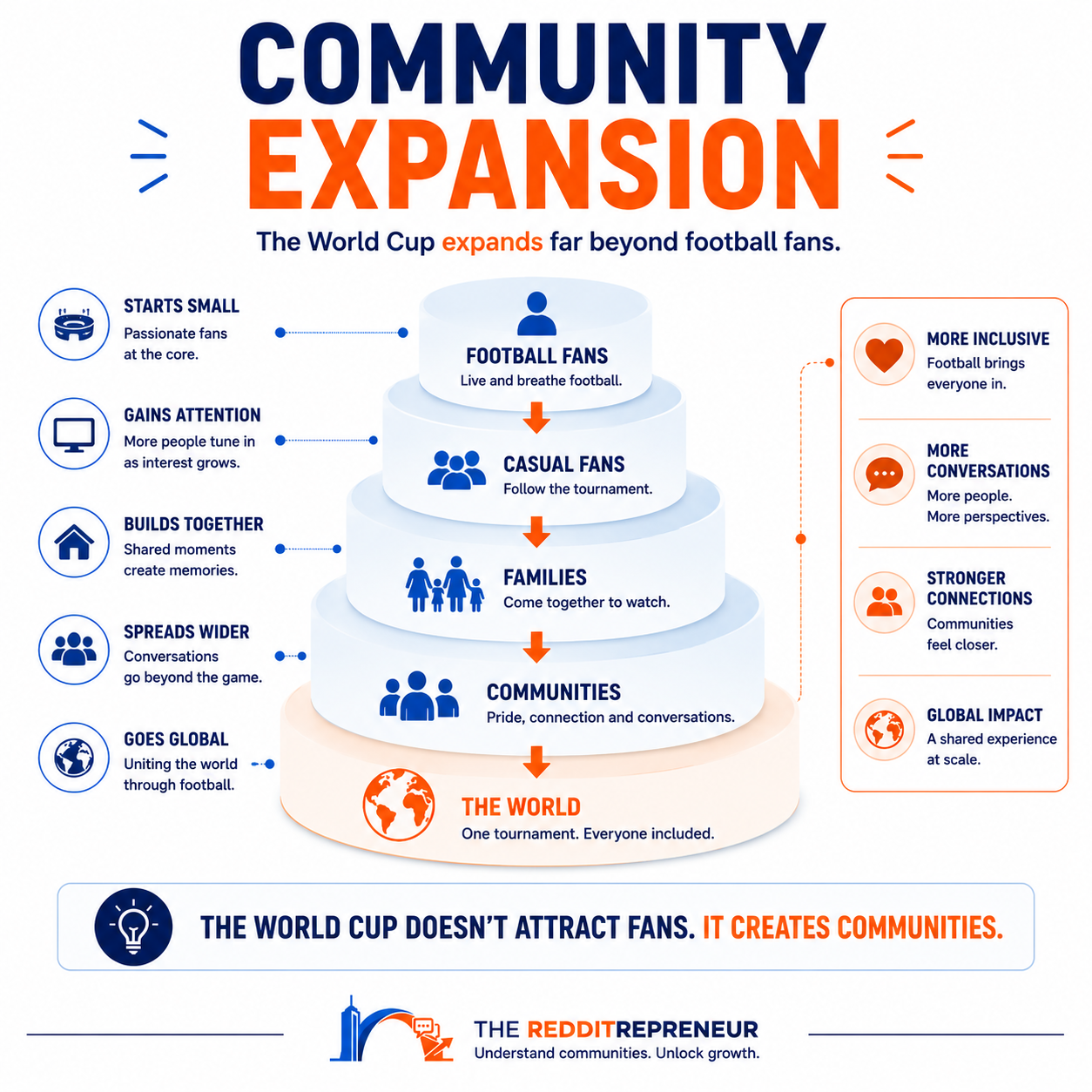
Most sporting competitions primarily engage existing fans.
The World Cup behaves differently.
Families watch together.
Workplaces discuss matches.
Schools talk about players.
Cities gather in public spaces.
People with limited interest in football often become emotionally invested.
This creates a significant expansion of the community.
Football temporarily stops being a specialist interest and becomes a shared cultural experience.
The audience grows beyond the sport’s traditional boundaries.
Related Framework: Community Expansion Effect
Key Finding #5: Multiple Communities Exist Simultaneously
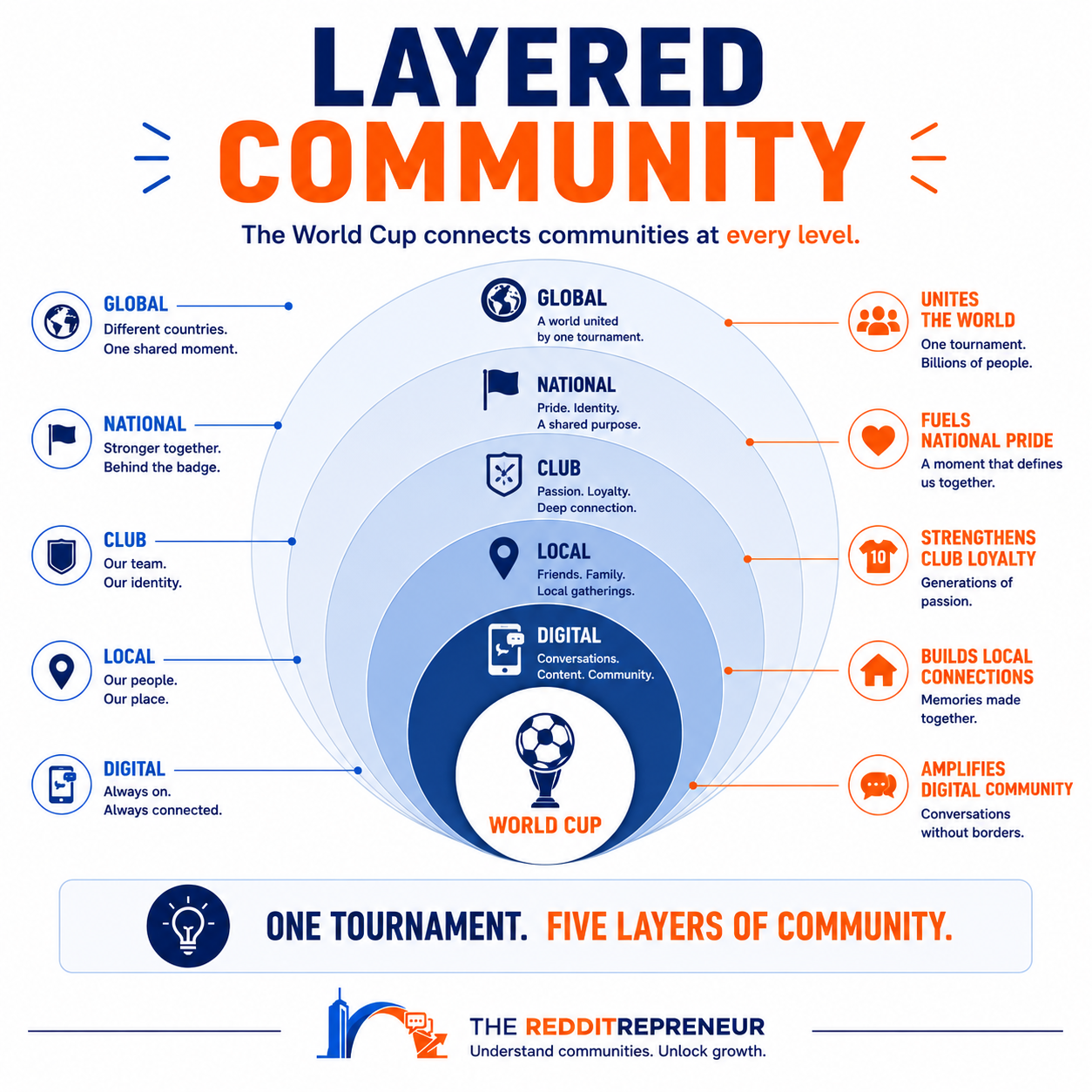
One of the most fascinating aspects of the World Cup, I find, is the number of overlapping communities involved.
The tournament creates interaction between:
- Football communities
- National communities
- Local communities
- Diaspora communities
- Cultural communities
- Political communities
- Online communities
These groups often interpret the same events differently.
A single match can trigger discussions about:
- Tactics
- National identity
- Immigration
- History
- Race
- Politics
- Culture
- Belonging
The football itself frequently becomes the starting point for broader conversations.
Related Framework: Layered Community Model
Key Finding #6: Shared Experiences Become Collective Memory
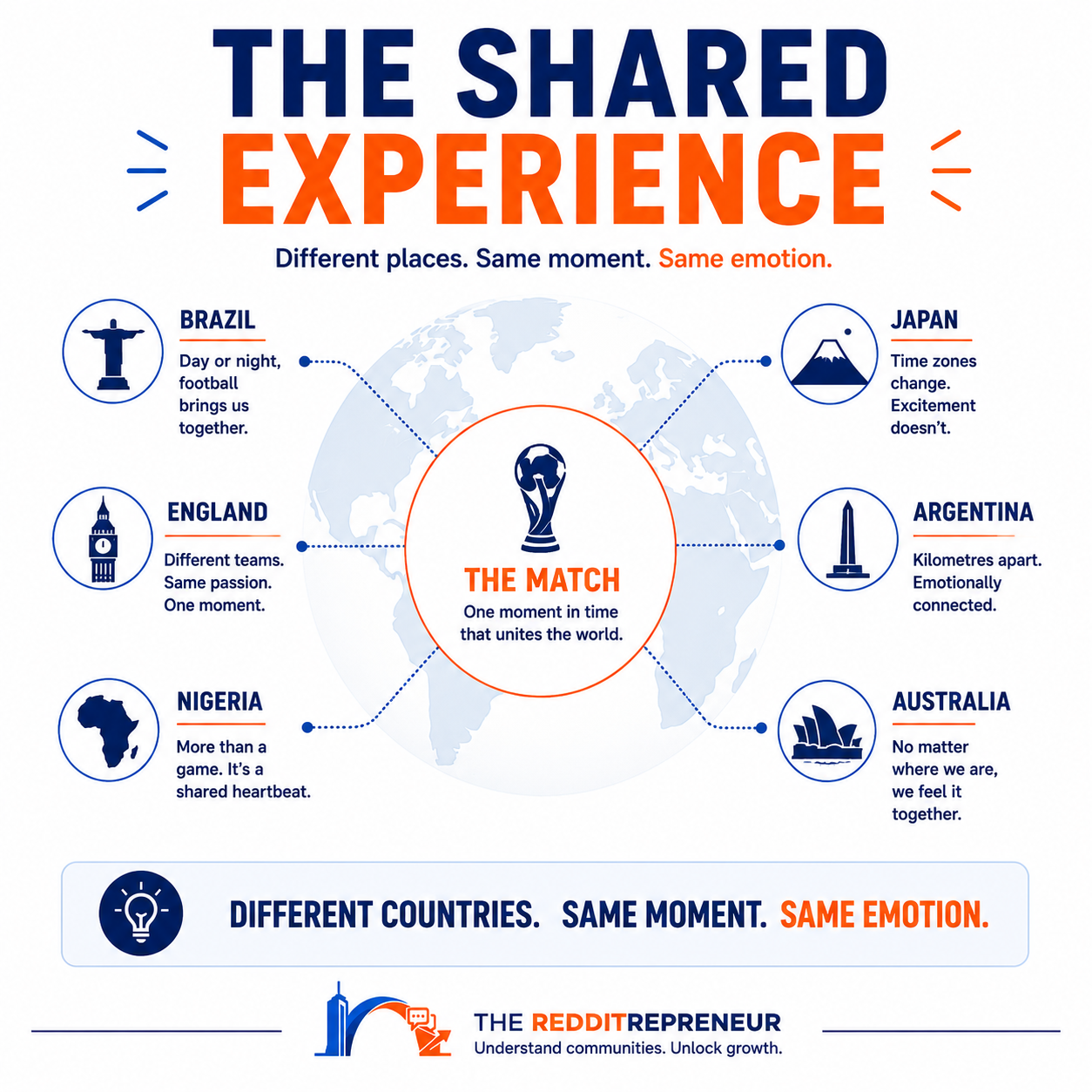
Modern audiences are increasingly fragmented.
People consume different content.
Follow different creators.
Participate in different online spaces.
The World Cup cuts through this fragmentation.
Millions of people watch the same event at the same moment.
They react together.
Celebrate together.
Suffer together.
Remember together.
These moments often become lasting memories.
People remember where they watched.
Who they watched with.
How they felt.
What happened afterwards.
The event becomes more than entertainment.
It becomes part of a shared cultural memory.
Related Framework: Shared Experience Effect
Key Finding #7: The Tournament Accelerates National Identity
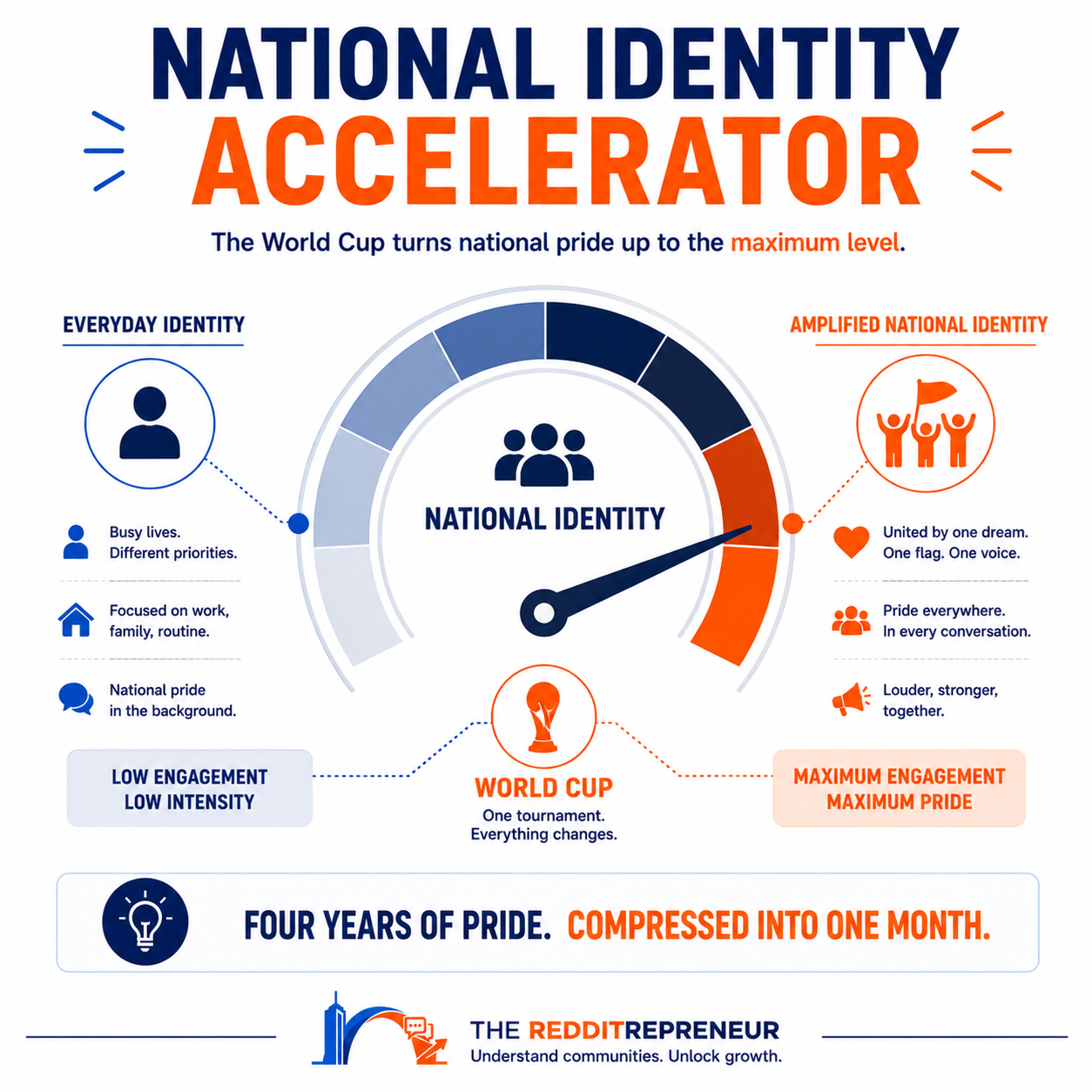
The World Cup often amplifies existing feelings of national identity.
Football shirts become symbols.
Goals become emotional events.
Victories become cultural moments.
For some nations, the tournament represents visibility.
For others, it represents validation.
For others, it provides unity, hope or collective expression.
As a result, conversations frequently move beyond football itself.
They become discussions about how people see themselves and how they wish to be seen by others.
This helps explain why emotional responses to World Cup outcomes often exceed those associated with other sporting events.
Related Framework: Identity Signals
Why The World Cup Feels Different
Many tournaments generate passionate communities.
The Euros.
AFCON.
Copa América.
The Olympic Games.
Each creates meaningful moments.
The World Cup operates at a different scale.
It creates overlap between communities that would rarely interact under normal circumstances.
Different cultures.
Different countries.
Different languages.
Different histories.
Different football traditions.
All participating within the same global conversation.
This level of simultaneous participation is exceptionally rare.
Strategic Implications
The World Cup demonstrates several important principles about community behaviour.
First, identity remains one of the strongest drivers of participation.
Second, communities become significantly more powerful when they create shared experiences.
Third, events with strong Community Gravity attract audiences far beyond their core participants.
Finally, communities become most active when they are connected to emotion rather than information.
People do not gather around facts.
They gather around meaning.
The World Cup provides meaning at a global scale.
Conclusion
The World Cup is not simply a football tournament.
It is one of the largest demonstrations of community behaviour in the world.
For one month, rivalries are rearranged.
Casual observers become participants.
National identities become amplified.
Shared experiences become memories.
And conversations become collective experiences.
The tournament reminds us that communities are not built solely through common interests.
They are built through shared emotions.
That may be the real reason the World Cup continues to captivate billions of people around the world.