
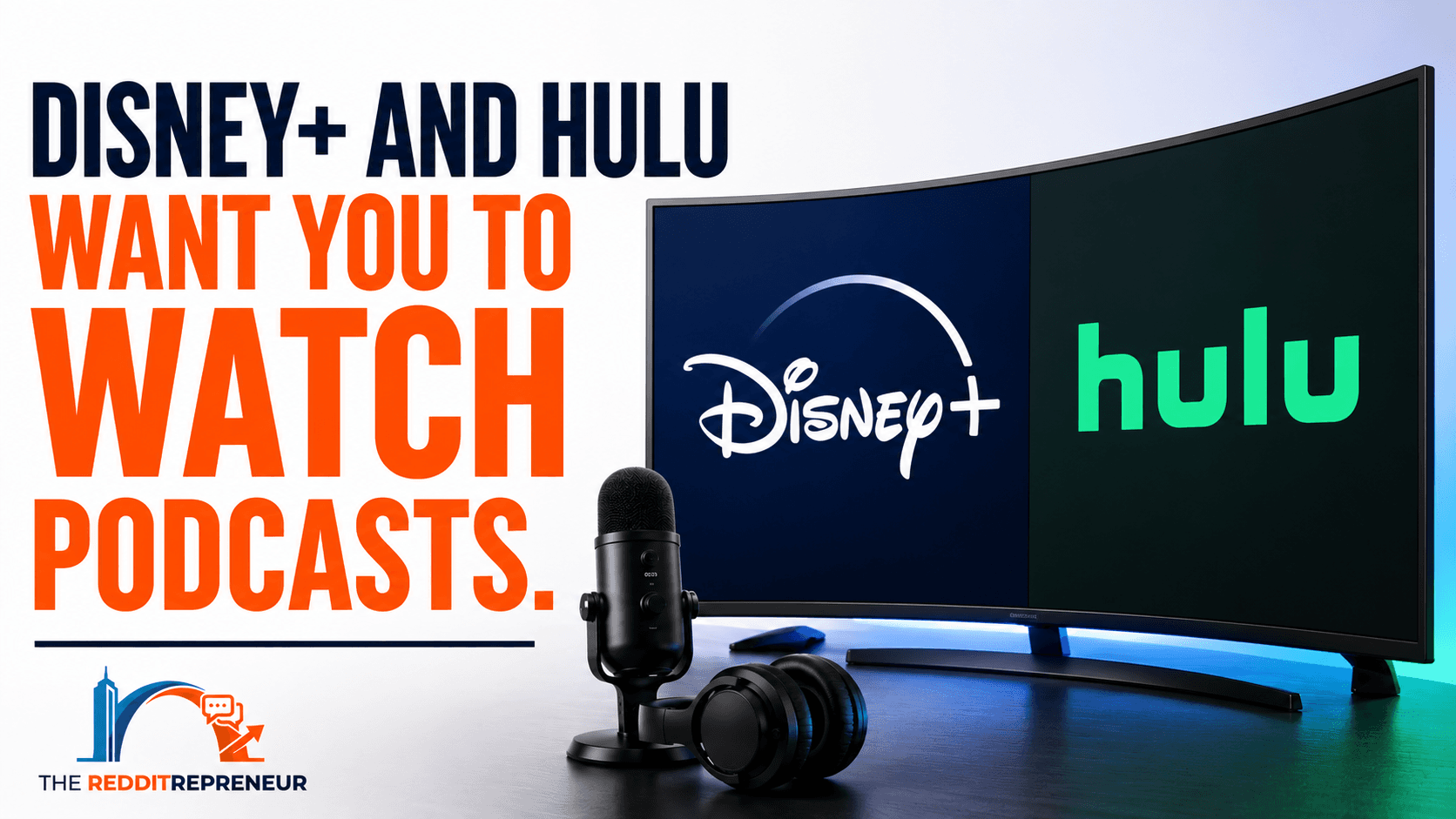
Disney+ and Hulu are getting more serious about video podcasts.
Disney has announced a deal with iHeartMedia that will bring six video podcasts to Disney+ and Hulu. The first is Hey Jonas!, featuring the Jonas Brothers, with other programmes including Fake Doctors, Real Friends With Zach and Donald, Pod Meets World, Desperately Devoted, Thanks Dad With Ego Nwodim and Las Culturistas.
At first glance, this looks like a straightforward content deal.
Disney has streaming platforms. iHeartMedia has popular podcasts. Put those podcasts on the streaming platforms and subscribers have more things to watch.
But there is a much more interesting question underneath it:
Just because people like watching podcasts, does that mean they want to watch them on Disney+ or Hulu?
That matters because other streaming companies, including Netflix, are already experimenting with bringing video podcasts into environments traditionally associated with television and film.
And some podcast audiences are showing that moving the programme does not necessarily move the audience.
Why Disney wants podcasts in the first place
Streaming companies have a difficult problem.
Making television programmes and films is expensive. A major drama can cost millions per episode. A blockbuster film can cost hundreds of millions and take years to produce.
Video podcasts are very different.
A relatively simple studio setup can produce an hour of programming every week.
That gives streaming companies something extremely valuable: regular content that can create a viewing habit without the production costs of traditional television.
Someone might subscribe to Disney+ because they want to watch a Marvel series, Pixar film or Bluey. Once they finish it, they may not return until something else they care about arrives.
A weekly podcast gives them another reason to open the app.
That is particularly valuable in a streaming market where Disney+, Netflix, Hulu, HBO Max, Prime Video, YouTube and others are ultimately competing for the same thing:
Your time.
Reuters reported that the iHeartMedia agreement forms part of Disney's attempt to broaden its content offering in an increasingly competitive streaming market. Netflix and other streaming companies have also been exploring video podcasts.
The business logic makes sense.
The audience behaviour is where things become more complicated.
Watching a podcast is not the same as watching television
Think about how people actually consume podcasts.
They might:
- listen while driving
- listen while walking
- have YouTube playing while working
- watch certain sections and listen to others
- discover episodes through recommended clips
- read the comments while watching
- switch between their phone, television and computer
That is very different from the traditional streaming behaviour of sitting down specifically to watch a television programme.
This distinction is already appearing in community conversations about Netflix's move into video podcasts.
Some Reddit users discussing podcasts that have moved onto Netflix have said they regularly watched programmes when they were easily available through YouTube, only to watch them less or stop watching after the move.
Others have questioned whether moving established programmes away from the platforms where their communities already exist is worth potentially losing existing viewers.
That is an important piece of Community Intelligence.
The podcast itself might not be the only reason someone watches. The platform can be part of the product too.
The Customer Insight Triangle helps explain what is happening
The Redditrepreneur's Customer Insight Triangle is useful here because there are three different things worth understanding:
- what people say
- what people actually do
- what they ultimately choose
Someone might say they love a particular podcast.
That sounds like strong loyalty.
But imagine that podcast moves from YouTube to another platform and that person stops watching.
We have learned something important.
Their loyalty was not unconditional.
They liked the podcast, but they also liked the experience surrounding it.
Maybe they liked YouTube's recommendations. Maybe they already had YouTube open every day. Maybe they used background playback. Maybe they liked reading comments. Maybe they simply did not associate Netflix or Disney+ with podcasts.
The programme might remain exactly the same.
The surrounding experience has changed.
And that can change behaviour.
For Disney, this distinction matters enormously.
Having popular podcasts available on Disney+ does not automatically mean existing podcast audiences will suddenly start opening Disney+ to watch them.
YouTube's comments matter more than they might appear
One particularly interesting piece of Community Intelligence comes from discussions about podcasts moving away from YouTube.
Some viewers say they miss the comments.
That might sound like a small feature.
Commercially, it isn't.
YouTube is not simply a video player.
Underneath a popular podcast episode there can be thousands of people:
- making jokes
- discussing something the guest said
- disagreeing with the hosts
- highlighting their favourite moments
- providing timestamps
- talking to other fans
The podcast creates the conversation.
The platform hosts the community around it.
Disney+ and Hulu can carry the video. They do not currently recreate that same community experience.
That means a company can successfully move the content while accidentally leaving part of the experience behind.
Community Gravity matters here too
The Redditrepreneur's Community Gravity framework looks at how strongly established communities can pull companies toward their existing expectations and behaviours.
Podcast audiences can have particularly strong Community Gravity because many listeners already have established routines.
Someone might have listened through Apple Podcasts for five years.
Someone else automatically opens Spotify every morning.
Another person subscribes to dozens of YouTube channels and allows the recommendation system to decide what they watch next.
Putting that podcast somewhere else is effectively asking the audience to change an existing behaviour.
That is harder than simply making the content available.
YouTube works particularly well for video podcasts because people already use it in flexible ways. They might listen rather than watch, rely on recommendations, discover clips before finding the full episode or only look at the screen when something visual happens.
The podcast fits inside behaviour that already exists.
Disney+ and Hulu have to create that behaviour.
This does not mean Disney's strategy will fail
There is an important distinction here.
Disney does not necessarily need every existing podcast listener to move.
Disney+ and Hulu already have enormous audiences of their own.
Putting podcasts there could introduce programmes to people who would never have discovered them through a traditional podcast app.
A Disney+ subscriber interested in the Jonas Brothers, for example, might see Hey Jonas! promoted inside the service and watch it even if they have never previously considered themselves a podcast viewer.
That creates a different opportunity.
Rather than simply moving podcast listeners onto Disney+, Disney could potentially create new podcast viewers from its existing streaming audience.
There is also an important difference between adding another place where audiences can consume something and forcing an established audience to move.
If a programme remains available through the services people already use, Disney+ becomes an additional distribution channel.
That creates choice.
Exclusivity creates friction.
Those are very different strategies.
Streaming services want to become bigger than television
There is a wider business trend underneath all of this.
Netflix, Disney+, Hulu and other streaming services increasingly do not want to be places people visit only when they want to watch a film or television series.
They want more of your entertainment time.
That means expanding into areas such as:
- podcasts
- games
- live events
- sport
- creator content
- other forms of entertainment
The objective is straightforward.
The more reasons someone has to open the app, the more valuable the subscription can feel and the less likely they may be to cancel it.
The battle between streaming platforms is therefore gradually becoming bigger than:
Who has the best television programmes?
It is becoming:
Which platform can become part of your everyday entertainment routine?
That is a much harder competition because companies are no longer only competing for content rights.
They are competing against habits people have already built elsewhere.
Market Gravity explains why streaming companies are moving in the same direction
The Redditrepreneur's Market Gravity framework looks at how wider market forces pull businesses toward similar strategies.
That is clearly happening with video podcasts.
YouTube has become enormously important to podcasting. Spotify has invested heavily in podcasts and video. Netflix has moved into video podcasts. Other streaming businesses are exploring the format. Now Disney+ and Hulu are expanding their offering through iHeartMedia.
Once audiences demonstrate that they are willing to spend huge amounts of time with a particular format, other platforms naturally want some of that attention.
That creates Market Gravity.
The danger is that companies can see a successful format and assume the format itself created the success.
But YouTube's success with podcasts is partly about YouTube itself.
Its recommendations matter.
Its search matters.
Its comments matter.
Its creators matter.
Its clips matter.
Its existing audience matters.
Simply placing a video podcast inside another streaming application does not automatically reproduce those conditions.
The real question Disney needs to answer
The success of this strategy will not simply be measured by how many podcasts Disney+ and Hulu add.
It will be measured by whether people develop a new behaviour.
Will someone open Disney+ specifically because a new episode of their favourite podcast has arrived?
Will Hulu viewers discover podcasts they had never previously watched?
Will people watch an hour long conversation on a service they normally associate with television?
Will streaming platforms eventually need better podcast discovery, clips, comments or other community features?
And perhaps most importantly:
Will podcast fans follow the programme, or stay with the platform where their habit already lives?
Those are Community Intelligence questions.
The technology required to put a podcast on Disney+ is relatively straightforward.
Changing what millions of people instinctively believe Disney+ is for is much harder.
That is why this story is bigger than six podcasts.
Disney, Netflix and other streaming companies are trying to expand the role their platforms play in people's lives.
But communities show us that entertainment behaviour can be extremely sticky.
You can move the content very quickly. Moving the habit could take much longer.
Turn conversations into clarity
Explore the Community Intelligence platform or commission a focused audit of your brand, competitors and market.