

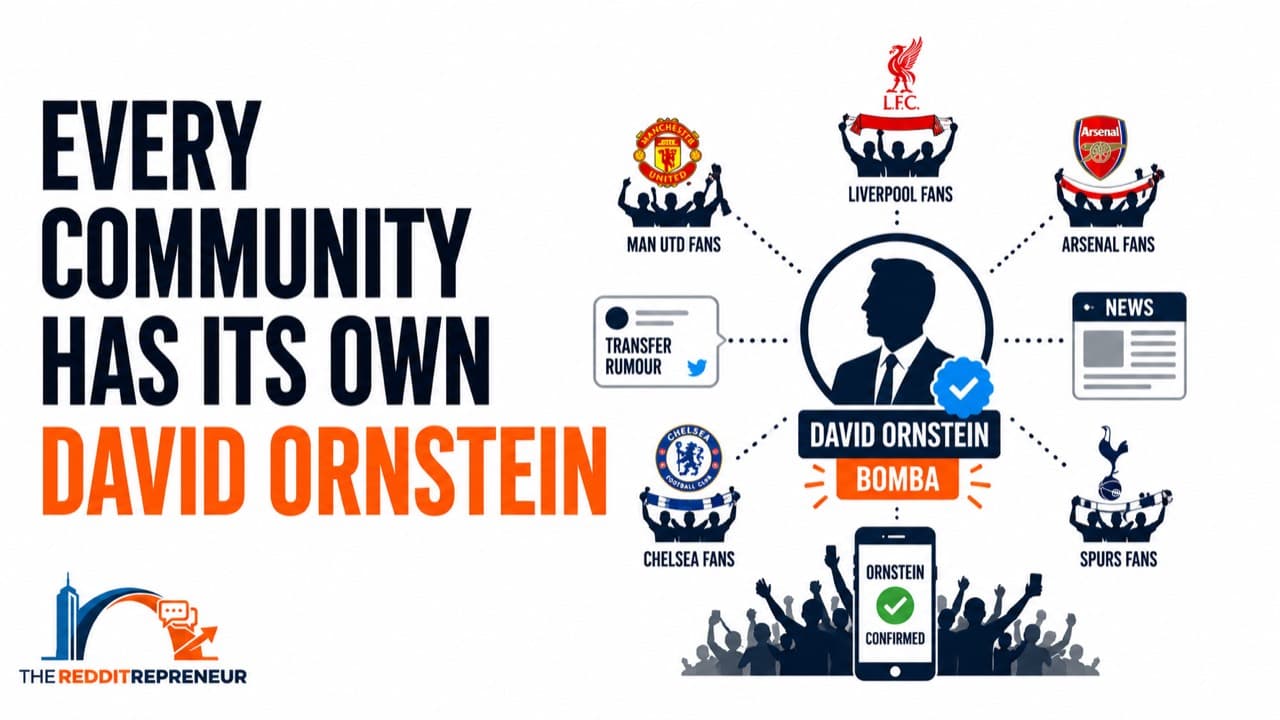
Football fans see transfer rumours every day.
A journalist posts something.
A fan account shares it.
A news website repeats it.
The rumour spreads across X, Reddit, TikTok, YouTube and WhatsApp.
Thousands of people may already be talking about it.
But many fans still say the same thing:
“I’ll wait until David Ornstein reports it.”
Then Ornstein posts.
Suddenly, the rumour feels real.
The player has not changed.
The club has not changed.
The transfer fee may not have changed.
What has changed is the source.
That tells us something important about how communities decide what to believe.
The Transfer Is Not Real Until the Trusted Source Says It Is
David Ornstein has built a reputation for being reliable.
He does not need to be the first person to mention every transfer.
His value comes from the fact that football fans trust him.
When he reports something, people feel more certain.
That is the difference between sharing information and confirming information.
A rumour creates attention.
A trusted source creates belief.
Every Fan Is Waiting for an Ornstein Bomba
Every transfer window, supporters hope David Ornstein will report something exciting about their own club.
Arsenal fans are waiting.
Liverpool fans are waiting.
Manchester United fans are waiting.
Chelsea fans are waiting.
Tottenham fans are waiting.
Supporters might already have seen ten posts about a possible signing.
They may have watched videos about it and argued about it online.
But they still want the Ornstein post.
That moment has become part of football culture.
Fans call it an Ornstein bomba because one report can suddenly change the mood of an entire fanbase.
A rumour becomes serious.
Hope becomes belief.
The transfer conversation moves into a completely different stage.
Fans Are Not Only Looking for Information
Football supporters already have more information than they could ever read.
The real problem is knowing which information deserves to be trusted.
That is why fans use trusted journalists as a shortcut.
Instead of checking every rumour themselves, they ask:
“Has Ornstein reported it?”
If the answer is no, they remain cautious.
If the answer is yes, they pay attention.
The community has chosen someone to help decide what is true.
This is another example of the way football communities build value through trusted voices.
This Is Bigger Than Football
The same thing happens in almost every industry.
Technology communities have trusted analysts.
Gaming communities have reliable insiders.
Finance communities have respected commentators.
Fashion communities have reviewers whose opinions carry real weight.
The names are different, but the behaviour is the same.
Every community creates people who help it decide what to believe.
The same creator trust can be seen in our analysis of Christopher Nolan and audience expectations.
The Biggest Audience Does Not Always Have the Most Trust
Businesses often assume the most important person is the one with the largest following.
That is not always true.
Someone can reach millions of people without being fully trusted.
Another person can have a smaller audience but enormous authority.
When that person speaks, opinions change.
That is why businesses should not only measure reach, views and followers.
They should also understand who holds trust inside the community.
Trust Concentration
This can be described as Trust Concentration.
Trust Concentration means that a large amount of belief sits with a small number of people.
Those people may be journalists, creators, experts, moderators, customers or industry insiders.
They can confirm a story, challenge a claim or change the direction of a conversation.
For a business, these are important people to understand.
They help shape what the wider market believes.
What Businesses Can Learn From David Ornstein
Businesses should ask:
- Who does our community trust?
- Whose opinion do customers wait for?
- Who can turn doubt into belief?
- Who influences the conversation without needing the biggest audience?
- Who does the community treat as a reliable source of truth?
These questions reveal more than a basic influencer list.
They show how trust actually moves through the community.
Community Intelligence Take
David Ornstein is more than a trusted football journalist.
He is an example of how communities create their own systems for deciding what is true.
Football fans do not believe every transfer rumour they see.
They wait for the voice they trust.
Every community has someone like that.
The businesses that identify those people will better understand how opinions are formed, how stories spread and how trust influences decisions.
Community Intelligence helps businesses find these trusted voices and understand why communities believe them.
The announcement is the news.
The person the community trusts to confirm it is part of the intelligence.