
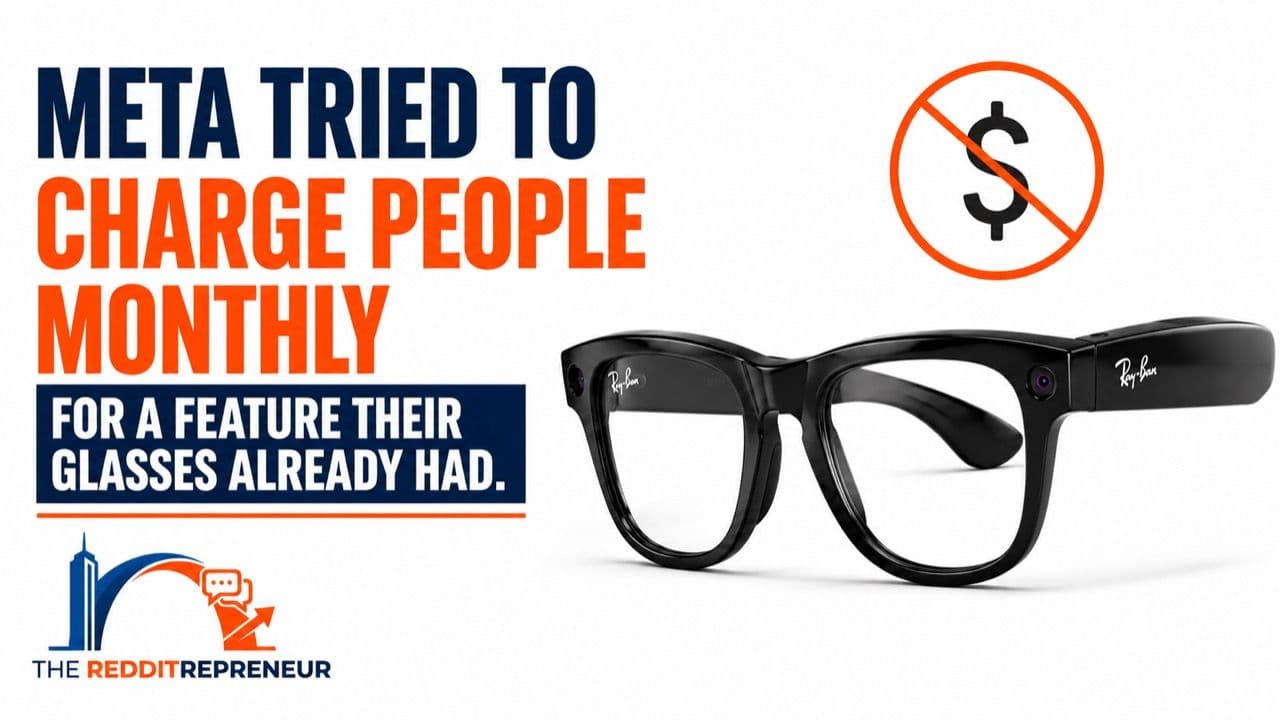
Meta recently tested a plan that upset some owners of its smart glasses.
The company planned to limit how long early testers could use a feature called Conversation Focus.
The feature helps people hear the person in front of them more clearly in a noisy place.
Meta planned to offer three free hours each month.
People who wanted more time could get up to fifteen hours through Meta One Premium.
That plan cost $19.99 a month in the United States.
Meta then paused the test after people complained.
The argument was not only about the monthly price.
It was about a much simpler question:
If you buy a product, what do you reasonably expect to keep using?
What Has Been Confirmed
Meta introduced Conversation Focus as an early access feature in the United States and Canada.
Meta named Ray Ban Meta glasses and Oakley Meta HSTN glasses when it announced that early access.
The later subscription test proposed three free hours each month.
The $19.99 Meta One Premium plan would have raised the limit to fifteen hours each month.
The feature uses the glasses’ microphones, speakers and on device processing. Independent testing found that it worked without an internet connection.
Meta described the limits as a subscription test.
Meta has now paused that test. It says Conversation Focus will remain free for early testers while it works on a better approach.
Paused does not mean permanently cancelled. Meta has not promised that the feature will always remain free.
This was not a permanent rule for every Meta glasses owner or every model.
What Meta Wanted to Charge For
Conversation Focus is designed to make face to face conversations easier to hear.
Imagine sitting in a busy café.
Music is playing.
Other customers are talking.
Cups and plates are making noise.
The glasses use their microphones to focus on the voice of the person in front of you.
Their open ear speakers then make that voice clearer.
That could be useful for many people.
It may be especially helpful for someone who struggles to follow conversations in noisy places.
The proposed Meta smart glasses subscription would have placed a monthly time limit on the feature for early testers.
After the three free hours were used, a customer would have needed the paid plan for more access that month.
This created an immediate problem.
People had already bought the glasses.
Some early testers could already use Conversation Focus on those glasses.
Many people therefore felt Meta was asking them to keep paying for permission to use an ability already inside the product.
That was their belief about the purchase.
It was not a legal ruling about who owned the software.
The Price Was Not the Main Problem
It is easy to describe the reaction as subscription fatigue.
People already pay monthly for:
- Streaming services.
- Music.
- Cloud storage.
- Software.
- Gaming.
- Phone contracts.
- AI tools.
Many customers are tired of adding another monthly bill.
But this case felt different.
Customers were not only saying the Meta glasses monthly charge was too high.
They were asking why they should pay every month for something their glasses could already do.
That is a product ownership question.
Customers Understand Paying for an Ongoing Service
People usually understand a monthly payment when the company has an obvious continuing cost.
Cloud storage needs servers.
A mobile contract needs a network.
A streaming service must keep licensing films and programmes.
Some advanced AI tools use powerful remote computers every time they are used.
Customers may still dislike the price.
But they can see why there is an ongoing charge.
Conversation Focus works on the glasses themselves.
It does not need remote cloud processing while it is helping someone hear a conversation.
That changes how people judge the fee.
The customer has already paid for the hardware doing the immediate work.
The monthly charge can therefore feel less like paying for a service.
It can feel like paying to remove an artificial limit from an on device feature.
Smart Products Have Changed What Ownership Means
Buying a normal pair of glasses is simple.
You pay for them.
You own them.
The company cannot later remove part of the lens or charge you monthly to keep using the frame.
Smart products work differently.
They combine:
- Physical hardware.
- Software.
- Online accounts.
- Updates.
- Remote services.
- Company controlled permissions.
This means the customer can hold the product in their hands without having full control over what it can do.
A company can release an update that:
- Adds a feature.
- Removes a feature.
- Limits a feature.
- Changes how a feature works.
- Introduces a subscription.
- Requires a new account.
- Ends support.
The customer owns the object.
The company may still control many of its abilities.
Customers Have an Unwritten Ownership Agreement
Every purchase comes with expectations.
These expectations may not appear clearly in the legal terms.
But they still shape how customers feel.
When someone buys smart glasses, they may believe:
- Existing features will keep working.
- Updates will improve the product.
- Basic functions will not suddenly require another payment.
- A feature running on their own device belongs with the device.
- The company will not make the product worse after purchase.
This is an unwritten agreement between the customer and the company.
It describes what the customer reasonably believes they bought.
It does not replace the legal terms.
When a company appears to break that agreement, the reaction can be stronger than the price would suggest.
What Customers Believe They Bought
Meta may see Conversation Focus as software that requires ongoing work.
The feature may need:
- Updates.
- Testing.
- Customer support.
- New language support.
- Safety improvements.
- Further development.
Meta has said its team continues to develop and improve the feature.
From Meta’s point of view, a subscription may help pay for that work.
But customers may see the situation differently.
They bought the glasses.
The glasses have the microphones.
The glasses have the speakers.
The Ray Ban Meta glasses feature can run using the product they already paid for.
From their point of view, the ability should remain part of the glasses.
Both sides are looking at the same feature through two different ideas of smart glasses ownership.
The Feature Is Also Connected to Accessibility
Conversation Focus is not only a fun extra.
It may help people who find it difficult to hear speech in busy places.
That makes the connected product pricing decision more sensitive.
People often judge a charge differently when the feature affects:
- Hearing.
- Sight.
- Movement.
- Communication.
- Independence.
- Safety.
A monthly fee for a novelty camera filter may cause mild annoyance.
A time limit on a feature that helps someone follow a real conversation can feel much more serious.
This does not make Conversation Focus a medical product.
It does mean people may see it as more important than an ordinary premium feature.
Meta Paused the Plan
Meta paused the subscription test after the backlash.
That shows the company was listening.
It also shows the value of customer communities.
Users quickly explained why the pricing model felt unfair.
They did not only say they disliked it.
They explained the belief Meta had challenged.
That belief was:
When I buy the glasses, I should be able to keep using the abilities already available on them.
Meta says the feature will remain free through its Early Access Program for early testers while it works on a better approach.
That stops the immediate limit.
But it is not a promise that Conversation Focus will remain free forever.
Customers may still wonder:
- Could Meta bring the charge back?
- Could other features become paid later?
- Which features are permanently included?
- Which features are only free during testing?
- What does buying the glasses actually guarantee?
One Simple Story Can Take Over
Complicated product decisions often become reduced to one easy sentence.
In this case, the story became:
Meta wants people to pay monthly for a feature they already bought.
This is what The Redditrepreneur calls Narrative Compression.
It simply means a complicated situation gets turned into one short story that is easy to understand and repeat.
The short story may leave out some details.
Conversation Focus was in early access.
Meta may have continuing development costs.
The subscription limits were a test.
But the simple version is much easier to spread.
Once that story takes hold, it can shape how people view future Meta updates.
A Customer Belief May Have Changed
The Redditrepreneur calls this Belief Correction.
That means customers change what they believe about a company or product.
The old belief may have been:
When I buy Meta’s glasses, I can keep using the features available on them.
The new belief may become:
Meta can decide later which parts of my glasses I must keep paying to use.
That belief is damaging because it affects more than one feature.
It creates doubt about the whole product.
A customer may hesitate before buying the next model.
They may worry that useful features will move behind a paywall.
They may choose a competitor that makes a clearer ownership promise.
This Was a Trust Shock
This was not a complete Trust Collapse.
Trust Collapse means people rapidly lose confidence after an experience breaks an accepted belief.
Meta reacted quickly.
The company paused the test.
Many owners may still be happy with their glasses.
But the situation created a Trust Shock.
A Trust Shock is a smaller moment that suddenly makes customers question something they had assumed.
In this case, customers began questioning whether buying the hardware meant keeping its software abilities.
Meta can recover from that.
But it now needs to be clearer about what ownership means.
Smart Products Need Clearer Labels
Companies selling connected products should divide features into simple groups.
Permanently Included
These features come with the product and will not later require another payment.
Free During Testing
These features are available for free now, but the company has not promised they will remain free.
Cloud Based Services
These features rely on outside servers and may have an ongoing cost.
Optional Premium Features
These are extra services that customers can choose to buy.
Time Limited Trials
These are free for a set period before payment is required.
Customers should understand these differences before buying the hardware.
The important information should not be hidden inside long legal terms.
What Meta Should Do Next
Meta should publish a simple ownership promise for its smart glasses.
It should explain:
- Which features are permanently included.
- Which features are still being tested.
- Which features may later require payment.
- Which features rely on cloud computing.
- What happens if a subscription ends.
- Whether existing features can be removed.
- How much notice customers will receive before changes.
This would not stop Meta from selling premium services.
It would help customers understand the deal before buying.
What Other Companies Can Learn
This lesson applies far beyond smart glasses.
It matters for:
- Connected cars.
- Smart home products.
- Fitness watches.
- Gaming devices.
- Printers.
- Home security systems.
- Medical technology.
- AI hardware.
- Software controlled appliances.
A business may legally have the right to change a product.
That does not mean customers will believe the change is fair.
Before placing an existing feature behind a smart hardware subscription, companies should ask:
- Did customers believe this was included when they bought the product?
- Does the feature create a real continuing cost?
- Does the feature run on hardware the customer already owns?
- Is the feature connected to safety or accessibility?
- Will the charge feel like a new service or a removed ability?
- What simple public story will form around the decision?
The Main Lesson
Customers do not reject every subscription.
They reject subscriptions that feel unfair.
The difference often comes down to what they believe they already paid for.
Meta may have viewed Conversation Focus as software that could become part of a paid plan.
Many customers viewed it as an ability already available inside their glasses.
That gap created the subscription backlash.
The company was not only testing a price.
It was testing the meaning of product ownership.
What This Means
- Customers understand paying for a real ongoing service.
- They may reject charges for features that already run on hardware they own.
- Smart product companies need to explain which features are permanently included.
- Product backlash is often about fairness and ownership, not only price.
Final Takeaway
Meta tested a monthly charge for longer access to a feature its glasses could already run.
The company later paused the plan.
But the case raises a much bigger question.
When a physical product depends on software, what does buying it actually mean?
Do you own the product?
Which abilities can you expect to keep?
Which abilities can the company later limit?
Connected products need clearer answers.
Customers may accept paying for a continuing service.
They react very differently when a company appears to charge them for continued permission to use something they believe they already paid for.
Community Intelligence Audit
Understand Whether Customers Believe a Product Decision Is Fair
Sales data can show whether customers paid for a feature.
It cannot always explain whether they believed the charge was fair.
The Redditrepreneur’s Community Intelligence Audit turns real customer conversations into clear insight about trust, ownership, pricing and product risk.
Community Intelligence means studying those conversations to understand what people believe and why.
Explore the Community Intelligence Audit Explore the Community Intelligence Platform