
Editor's Note
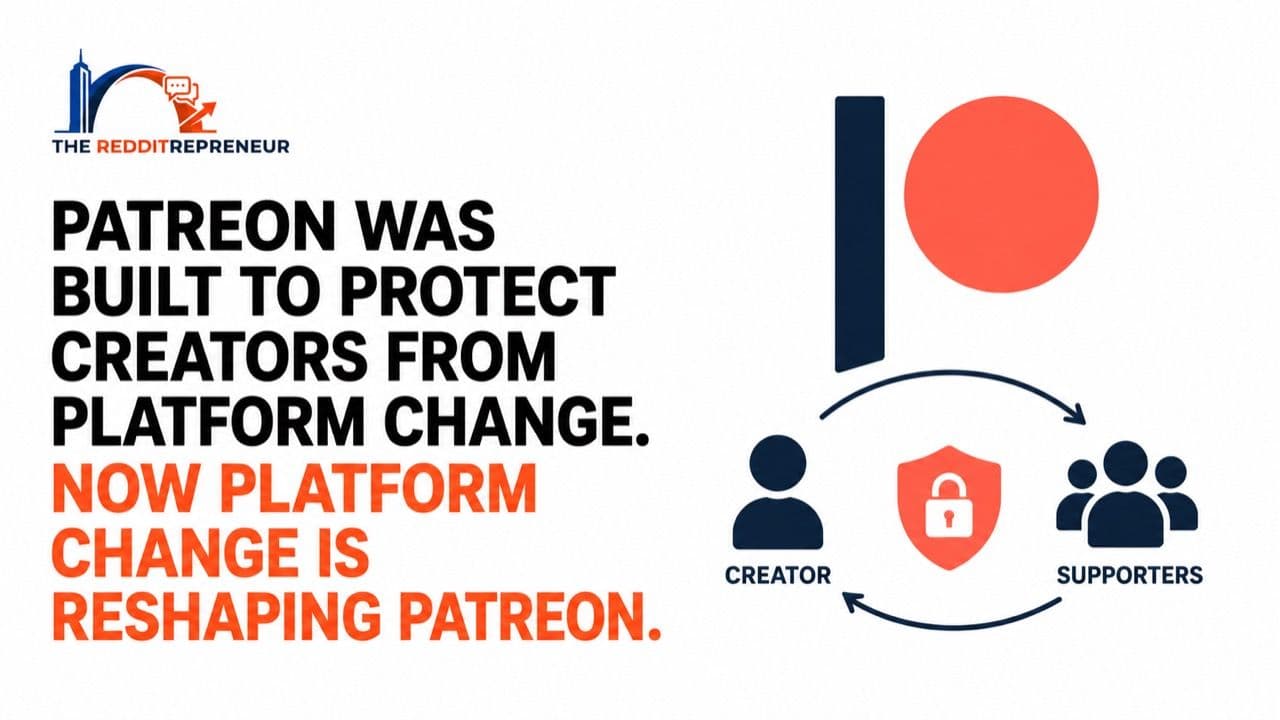
Patreon was built to help creators rely less on social media platforms.
It gave writers, artists, podcasters, musicians and video creators a way to earn money directly from their biggest supporters.
That promise still matters.
But Patreon is also a technology company.
It faces competition, changing customer needs and the growth of artificial intelligence.
This article looks at what that means for creators in the simplest possible terms.
The Short Answer
Patreon gives creators more control over income and supporter relationships, but creators still depend on Patreon's payment systems, tools, rules and business decisions. It reduces platform risk. It does not remove it.
What Patreon Has Confirmed
Patreon is changing how it runs its business.
On 23 July 2026, the company announced that it was cutting 93 roles.
That was 20% of its team.
He said Patreon wanted to become faster at dealing with change.
He also said Patreon's main business remained healthy and its roadmap was not changing.
Conte said AI was changing how technology companies work, build products and communicate.
But he also made a clear point.
Patreon was not making the cuts because it believed AI could replace people.
Variety separately reported the 93 job cuts and Patreon's explanation.
That is the confirmed information.
It would be wrong to claim that Patreon replaced 93 workers with AI.
What Is Patreon?
Patreon is a platform that helps creators earn money from supporters.
A creator might be:
- A writer.
- A musician.
- An artist.
- A podcaster.
- A video creator.
- A teacher.
- A game developer.
Supporters can pay every month or buy certain content.
In return, they may receive extra videos, private podcast episodes, early access or community membership.
Patreon collects payments.
It gives creators membership tools.
It also provides a place to publish and communicate with supporters.
Why Creators Use Patreon
Many creators first build an audience on YouTube, Instagram, TikTok or Facebook.
Those platforms control who sees their work.
A creator may have thousands of followers.
But the platform decides how many followers see each post.
This is often controlled by an algorithm.
An algorithm is simply a set of rules used to decide what appears on screen.
The platform can change those rules at any time.
A creator can lose views and income without changing the quality of their work.
Patreon offers a different model.
A supporter chooses to pay the creator directly.
This can make income feel more stable.
It can also create a closer relationship between creators and their strongest supporters.
Direct Does Not Mean Independent
This is the most important part of the story.
Patreon helps creators build a more direct relationship with supporters.
But that relationship still runs through Patreon.
Patreon controls:
- The website and app.
- The payment system.
- The membership tools.
- The rules and fees.
- The customer support.
- The product features.
A creator may become less dependent on YouTube or Instagram.
They may become more dependent on Patreon instead.
This does not mean Patreon is bad.
It means creator independence is not as simple as it first appears.
What Is Borrowed Independence?
Borrowed independence happens when a platform gives someone more control but still owns the system underneath that control.
Imagine running your own shop inside somebody else's building.
You choose what to sell.
You set many of your own prices.
You build relationships with customers.
But the building owner can change the rent, rules or opening hours.
You have control.
You do not own the whole system.
Patreon works in a similar way.
Creators control more of the relationship.
Patreon still controls much of the infrastructure.
Infrastructure means the tools and systems that keep something working.
A Direct Relationship Is Not the Same as Owning It
Creators own the trust they have built.
They own their ideas and creative work.
Patreon's current terms say creators keep full ownership of what they create and post.
Patreon still plays an important role in processing payments, delivering content and managing access.
The real test is simple.
Could the creator keep the relationship running if Patreon suddenly changed?
- Could they contact every supporter?
- Could they move payments elsewhere?
- Could they move years of content?
- Could they keep earning without a long interruption?
These questions show how independent the creator really is.
Why Patreon's Own Changes Matter
Patreon exists partly because creators were tired of sudden platform changes.
Now Patreon is making important changes of its own.
This does not mean Patreon has broken its promise.
Every company has to adapt.
But no platform stands outside the wider technology market.
Patreon still has to respond to competition, costs, new technology and changing creator needs.
Creators may use Patreon to protect themselves from changes at YouTube or Instagram.
They cannot assume Patreon itself will never change.
The AI Question
Patreon has said creators should decide whether their work is used to train AI systems.
Training means showing an AI system large amounts of material so it can learn patterns.
Patreon says it now uses Cloudflare tools to block known AI training crawlers across the platform.
A crawler is software that automatically visits and copies information from websites.
At the same time, Patreon is using AI inside its own company.
These positions are not automatically opposites.
A company can protect creator work while using AI for suitable tasks.
But Patreon must explain the difference clearly.
Creators will want to know:
- How Patreon uses AI.
- Whether creator content is used for training.
- Whether human support will remain available.
- Whether automated systems make account decisions.
- When creators will be told that AI is involved.
Patreon's public statements support creator consent and say known AI training crawlers are being blocked.
They do not answer every possible question about Patreon's internal AI use.
What Creators Will Notice First
Creators will not judge the restructuring through business language.
They will judge it through daily experience.
They will notice:
- Whether support becomes slower.
- Whether payment problems are fixed.
- Whether new features are useful.
- Whether account appeals feel fair.
- Whether Patreon communicates clearly.
- Whether creators still feel heard.
Patreon says the new structure will help it improve creator and fan experiences.
The effect will become clear through what creators experience next.
Why Community Intelligence Matters
Business data can show whether creators continue using Patreon.
It can show how many supporters are paying and which features people use.
But those numbers do not fully explain what creators believe.
A creator may remain on Patreon while becoming less confident in it.
They may stay because moving feels difficult.
They may quietly build a backup plan.
They may export their data or begin recommending another platform.
Community Intelligence means learning from real conversations to understand these changing beliefs.
Reddit, creator forums and social posts can reveal growing distrust, support problems, interest in alternatives and reasons people still stay.
This information can appear before the company sees a serious change in its numbers.
That is why Community Intelligence can work as an early warning system.
Community Gravity Makes Leaving Difficult
Patreon has strong Community Gravity.
Community Gravity is the force that makes people stay because their relationships, history and routines are already there.
A creator may have years of paid members, old posts, established membership levels and income arriving every month.
Moving all of this is difficult.
Another platform may offer better tools.
Leaving Patreon may still create confusion, lost payments and extra work.
That gives Patreon time to fix problems.
It also gives Patreon a responsibility to treat creator trust carefully.
Patreon Has a Mission Premium
Patreon presents itself as a company that supports creative people.
That gives it a Mission Premium.
A Mission Premium means people expect more from a company because of what it claims to stand for.
Creators may judge Patreon more harshly because its identity is closely linked to protecting creators.
The stronger the mission, the higher the standard.
The Risk of a Simple Internet Story
Complicated stories often become very simple online.
Patreon's restructuring could be reduced to one sentence:
Patreon is replacing workers with AI.
That is not what Patreon said.
The Redditrepreneur calls this Narrative Compression.
Narrative Compression happens when a complicated event becomes one short belief that is easy to repeat.
Patreon can reduce confusion by explaining what changed, how AI will be used and what creators should expect next.
Silence leaves room for the simplest story to win.
Creators Need a Backup Plan
The lesson is not that creators should leave Patreon.
Patreon can still be a useful part of a creator business.
The lesson is that no single platform should be impossible to leave.
Keep an independent email list
Creators should have a legal and secure way to contact supporters outside one platform.
Patreon currently lets creators export available audience email data.
Creators must follow privacy and marketing laws when using that information.
Build a creator owned website
A website gives creators a stable place for their work, information and contact details.
Export data regularly
Creators should download the information they are allowed to export and store it securely.
Keep another payment or community route
A second safe payment option or community space can reduce the damage caused by one platform change.
The goal is not to create extra work.
The goal is to stop one company decision from ending the whole creator business.
What Patreon Should Do Next
Patreon should make creator confidence a major part of its next steps.
It should:
- Explain its AI use in simple language.
- Keep creator data easy to export.
- Protect access to human support.
- Report on support quality.
- Explain how the smaller team may affect creators.
- Make account decisions easy to understand.
- Listen closely to creator communities.
The company should not only ask whether creators remain active.
It should ask whether creators still feel safe building their future on Patreon.
What Every Platform Should Learn
The same lesson applies to newsletter platforms, marketplaces, course platforms and membership businesses.
A platform can give users more control.
But users are not fully independent when they cannot take their relationship, data and business elsewhere.
The best platforms do not trap users.
They become valuable enough that users choose to stay.
Community Intelligence Insight
Product data shows whether users are still on a platform.
Community Intelligence reveals why they are staying.
Some stay because they are happy.
Others stay because leaving feels too difficult.
A company must understand the difference.
What Creators Should Remember
Patreon can help creators build more stable income.
It can reduce dependence on social media algorithms.
But it does not remove platform risk.
Creators should build close relationships with supporters while protecting their ability to communicate, move and continue earning elsewhere.
The goal is not complete independence overnight.
The goal is to become less vulnerable over time.
Frequently Asked Questions
Is Patreon replacing workers with AI?
Patreon cut 93 roles and said AI is changing how technology companies operate. Patreon also said it did not make the cuts because it believes AI replaces people. The company described the change as a wider restructuring.
Does Patreon help creators own their audience?
Patreon helps creators build closer relationships with paying supporters. Patreon still controls important parts of the payment and membership system. Creators can export available member email data and should also build independent contact routes where appropriate.
Is Patreon safe for creators?
Patreon is a widely used creator platform, but no platform is free from business, policy, payment or technology risk. Creators should use secure accounts, follow the rules and maintain suitable backups.
Should creators leave Patreon?
No. This article is not telling creators to leave Patreon. It is advising them not to make any single platform impossible to leave.
What does borrowed independence mean?
Borrowed independence means a platform gives someone more control while still owning the system underneath that control.
Do People Trust Your Platform, or Do They Simply Feel Unable to Leave?
The Redditrepreneur helps companies understand what customers and communities really believe.
Explore a Community Intelligence Audit, an AI Authority Audit or a Reddit Authenticity and Risk Audit.
Explore Community Intelligence Audits Visit The Redditrepreneur