
Imagine buying a luxury car.
You spend tens of thousands of pounds.
You drive it home expecting every screen, button and feature to be part of the experience you’ve paid for.
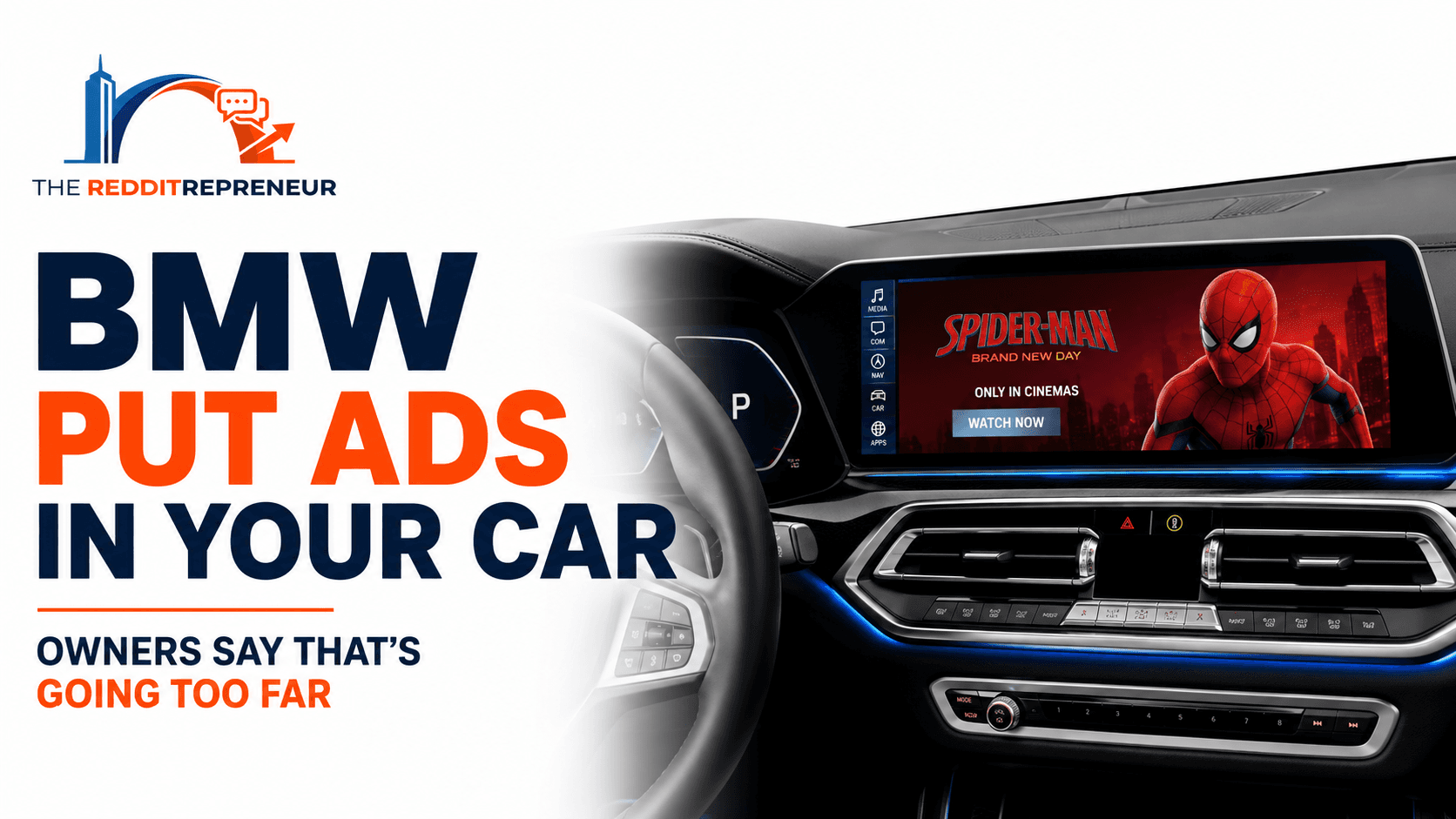
Then one morning you start the car and a promotional advert appears on the dashboard.
That is exactly what happened to some BMW owners this past week.
BMW launched a promotional campaign for Spider Man: Brand New Day, showing an optional movie experience through the vehicle’s infotainment system. The company says drivers can choose whether to watch it, but many owners were unhappy that a promotion appeared inside a car they already own.
The reaction online wasn’t really about Spider Man.
It was about something much bigger.
When Does a Product Truly Belong to You?
Cars are becoming more like smartphones.
They receive software updates.
New features are added remotely.
Problems are fixed without visiting a dealership.
That brings plenty of benefits.
But it also creates a new question.
If the manufacturer can continue changing your car after you’ve bought it, where does ownership end and company control begin?
That is the debate BMW has accidentally started.
The Community Isn’t Angry About One Advert
Reading through Reddit and automotive forums, one theme appeared again and again.
People weren’t saying,
“I hate Spider Man.”
They were saying,
“I don’t want advertisements inside something I’ve already paid for.”
That distinction matters.
Many owners said they would have accepted the campaign if it had appeared inside the BMW app or been something they actively chose to download.
Instead, the promotion appeared on the dashboard during startup.
For some drivers, that crossed a line.
The dashboard isn’t seen as advertising space.
It’s seen as part of the car.
Luxury Brands Sell Escape
BMW isn’t competing on price.
It sells quality.
Engineering.
Status.
Experience.
That is why some owners felt the promotion made the vehicle feel less premium.
Luxury products are supposed to remove distractions from everyday life.
Advertising is a distraction.
Several community members compared it to buying an expensive television only to discover adverts appearing every time it switches on.
Others brought up BMW’s previous heated seat subscription controversy, arguing that this was another example of software changing what ownership feels like.
Even people who weren’t particularly upset by the advert questioned whether this could become normal in the future.
If it’s one movie today…
What comes next?
The Community Intelligence Insight
This story isn’t really about advertising.
It’s about expectations.
When someone buys a BMW, they believe they own the complete experience.
BMW sees the car differently.
Because the software stays connected to the company, the experience can continue evolving long after the sale.
Those two ideas are beginning to clash.
Customers think,
“I bought the car.”
Manufacturers increasingly think,
“We continue managing the product.”
That difference may become one of the biggest challenges facing connected products over the next decade.
Why This Matters Beyond Cars
BMW probably won’t be the last company to face this debate.
Smart televisions already display recommendations.
Games consoles promote new releases.
Smart speakers receive new features.
Even household appliances are becoming connected to software.
The more products rely on updates, the more opportunities companies have to change the customer experience after purchase.
The question every brand should ask is simple.
Just because you can add something later…
Should you?
What Brands Can Learn
Technology makes it easier than ever to keep improving products after they’re sold.
Customers generally welcome updates that make products better.
They become much less enthusiastic when updates feel like they primarily benefit the company instead.
There is a difference between improving a product and commercialising it.
Communities notice that difference very quickly.
Something to Remember
BMW didn’t just launch a movie promotion.
It reopened a much bigger conversation about ownership in the digital age.
As more products become software driven, companies will continue looking for new ways to generate revenue after the initial sale.
The brands that succeed won’t necessarily be the ones that find the most opportunities.
They’ll be the ones that understand where customers believe the line should be.
Because once people feel like a product they own has become someone else’s advertising space, trust becomes much harder to rebuild.
Community Intelligence Takeaway
The strongest reaction wasn’t directed at Spider Man or even the advert itself.
It was directed at the feeling that something personal had quietly become commercial.
For connected products, that may become one of the defining trust challenges of the next decade.
Turn conversations into clarity
Explore the Community Intelligence platform or commission a focused audit of your brand, competitors and market.