
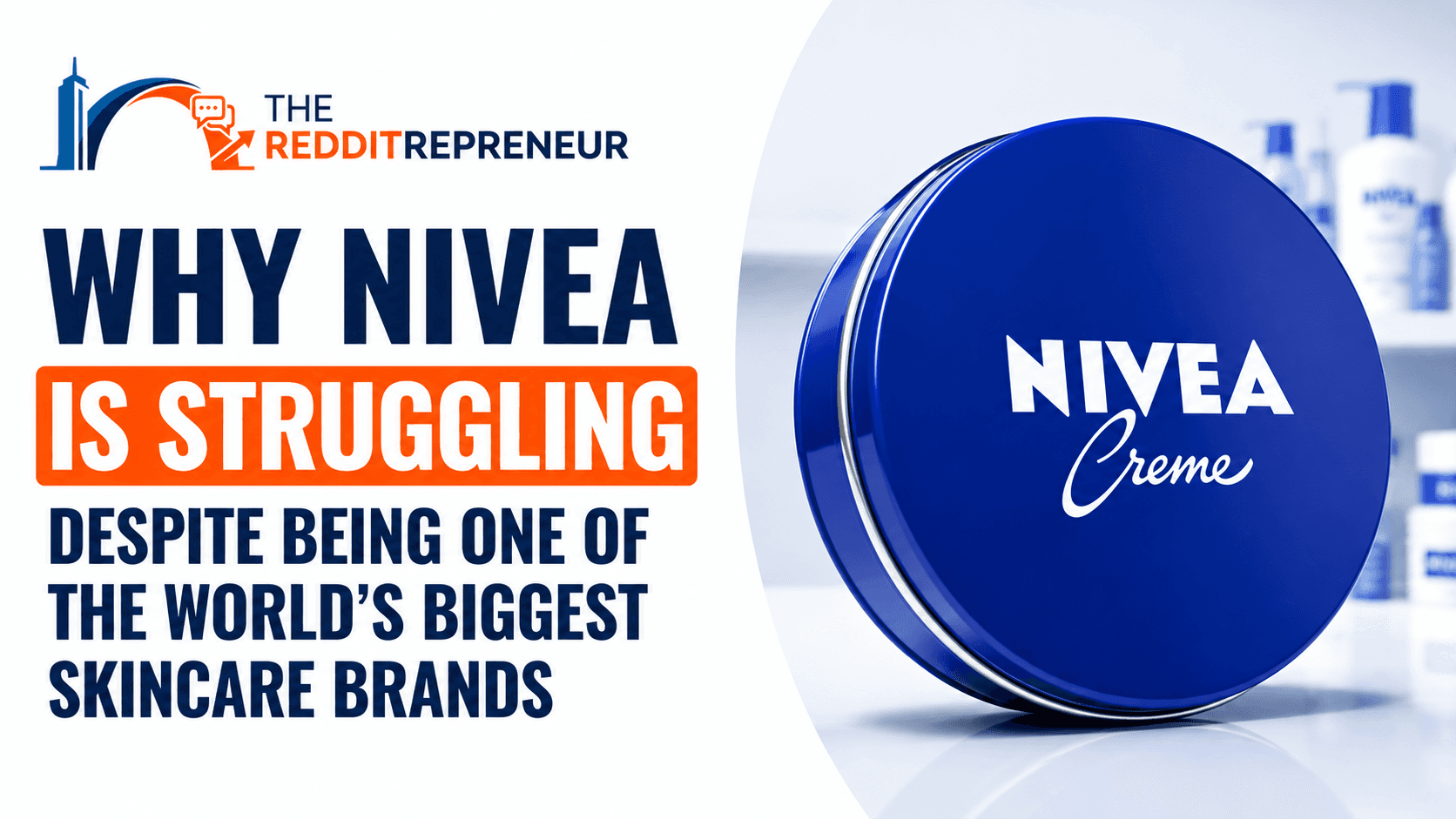
Walk into almost any supermarket or pharmacy and you’ll probably find Nivea.
It’s one of the most recognisable skincare brands in the world. Millions of people have grown up using its blue tins, body lotions, deodorants and sunscreens. Because of that, many people assume Nivea should be one of the safest businesses in the beauty industry.
Nivea’s parent company, Beiersdorf, surprised investors by lowering its expectations for the rest of 2026.
At first glance, this seems confusing. How can such a well-known brand struggle?
The answer reveals something much bigger than skincare.
It shows that being famous is no longer enough.
What happened?
Beiersdorf announced that it now expects sales to fall slightly during 2026, instead of staying flat or growing.
The company also reduced its profit forecast because it plans to spend much more on marketing, advertising and new product launches to help Nivea recover.
One statistic stood out.
Earlier this year, Nivea’s organic sales fell by 7%, largely because of price reductions and difficult conditions in the mass skincare market.
The company believes growth should return during 2027, but for now it is having to work much harder just to keep customers interested.
This isn’t a product problem
If you spend time reading skincare communities on Reddit, something interesting appears.
People rarely describe Nivea as a bad brand.
In fact, many users praise its research, affordability and reliability.
One discussion even described Beiersdorf as an “underrated” skincare company because of the amount of science behind its products.
Instead, the conversation often sounds like this:
“The old formula was better.”
“Why did they change this?”
“Has this product disappeared?”
“Does anyone know a replacement?”
That tells us something important.
The issue isn’t that consumers suddenly dislike Nivea.
The issue is that customers have more choices than ever before.
The skincare market has become crowded
Twenty years ago, supermarket skincare was dominated by a handful of global brands.
Today consumers can choose from:
- Korean skincare
- Dermatologist brands
- TikTok favourites
- Celebrity brands
- Independent startups
- Luxury skincare
- Pharmacy brands
- Subscription beauty brands
Every week another product goes viral.
Every month another ingredient becomes fashionable.
Consumers aren’t necessarily abandoning Nivea.
They’re experimenting much more often.
Community Intelligence insight
The biggest lesson is this:
Nivea is suffering from Familiarity Fatigue.
People trust the brand.
They know it works.
But familiarity no longer creates excitement.
Today’s beauty communities reward discovery.
People enjoy finding the next product before everyone else.
Sharing a hidden skincare recommendation has become part of online identity.
That creates a difficult position for brands like Nivea.
Being dependable is commercially valuable.
Being exciting increasingly drives conversation.
Those are not always the same thing.
Social media has changed how skincare grows
Years ago skincare companies largely controlled their own marketing.
Today communities decide which products deserve attention.
One creator recommends a moisturiser.
Thousands of comments appear.
Dermatologists respond.
Customers post before-and-after photos.
People compare ingredients.
The discussion becomes bigger than the advertising campaign itself.
In many cases the community becomes the marketing department.
Large established brands cannot manufacture that kind of excitement simply by increasing advertising spend.
The Trust versus Discovery problem
This creates an interesting contradiction.
Consumers often trust Nivea.
But they buy something else.
Why?
Because trust answers one question.
Discovery answers another.
Trust asks:
“Will this product work?”
Discovery asks:
“What if something works even better?”
Beauty communities are constantly searching for that second answer.
The Community Gravity framework
One Redditrepreneur framework fits this story particularly well.
Community Gravity
Community Gravity measures how naturally people gather around a product without the company forcing the conversation.
Products with strong Community Gravity generate:
- recommendations
- tutorials
- routines
- comparisons
- success stories
- ingredient discussions
- before and after photos
Communities keep the conversation alive.
Nivea still has enormous trust.
But many newer brands currently have stronger Community Gravity because people feel they are discovering something new together.
That doesn’t necessarily mean they’re better products.
It simply means they’re creating more community participation.
More marketing may not solve the real problem
Beiersdorf plans to invest more heavily in marketing to restart growth.
That makes perfect business sense.
But Community Intelligence suggests something else.
Marketing creates awareness.
Communities create belief.
Those are different things.
If people already know your brand exists, spending more money telling them it exists again rarely changes behaviour.
The more valuable question becomes:
What are people excited enough to tell each other?
What brands should learn
Every established consumer brand should pay attention to this story.
The biggest competitors today are often not larger companies.
They’re communities.
A skincare product can become successful because thousands of ordinary people collectively decide it’s worth talking about.
That conversation creates momentum advertising cannot easily buy.
Something to remember
Nivea’s challenge isn’t that people have stopped trusting it.
It’s that modern consumers don’t only buy products anymore.
They buy discoveries.
The companies that win over the next decade won’t simply build great products.
They’ll build products that communities feel excited to discover, recommend and keep talking about.
That is becoming one of the biggest competitive advantages in consumer brands.
Turn conversations into clarity
Explore the Community Intelligence platform or commission a focused audit of your brand, competitors and market.