

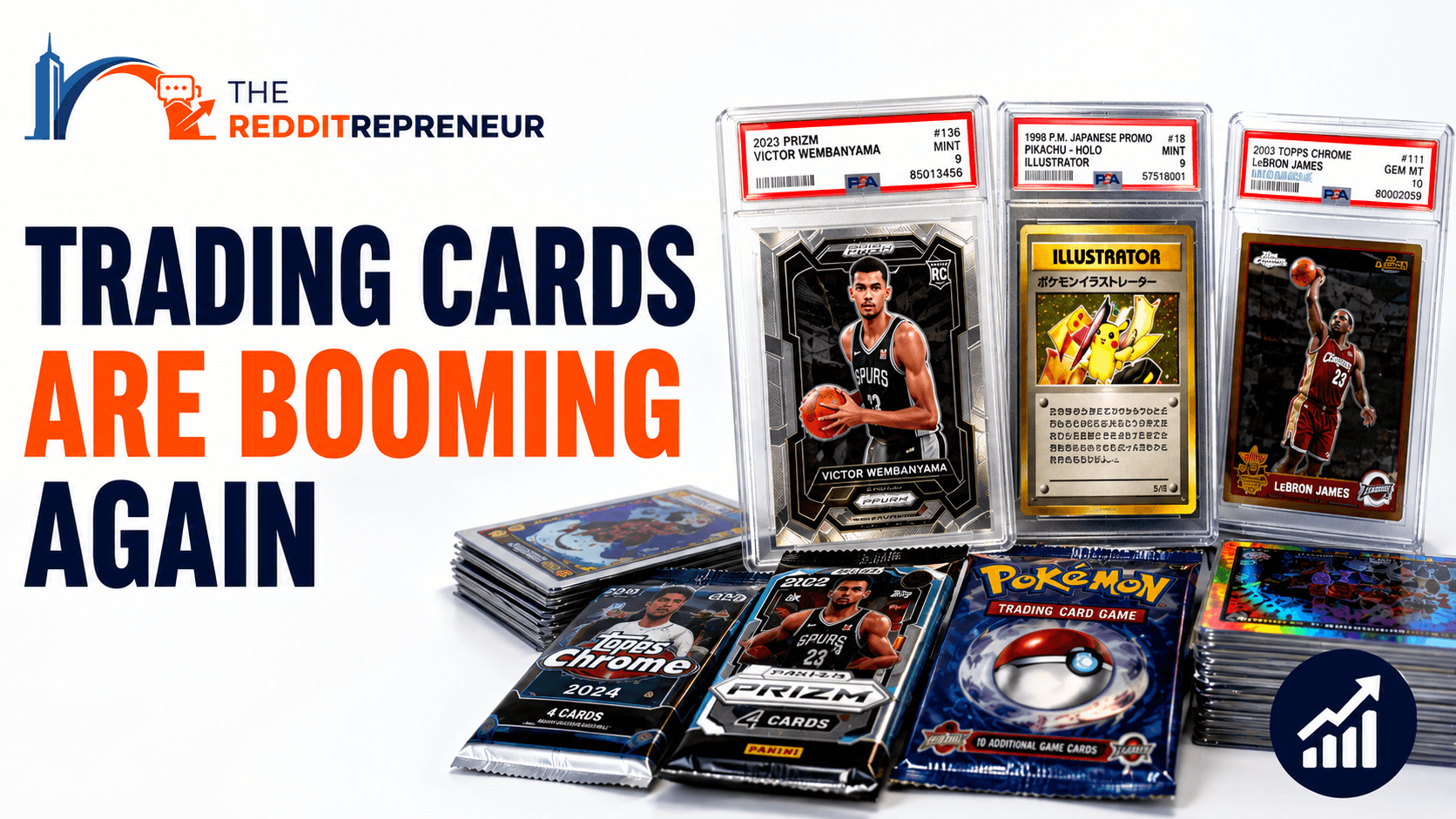
If you haven't looked at trading cards for a few years, you might think nothing has changed.
People still buy packs.
Collectors still hunt for rare cards.
Children still trade with friends.
But today's trading card industry is very different.
Some cards now sell for hundreds of thousands of pounds.
Entire businesses have formed around grading, investing, breaking packs live on stream and predicting future values.
Sports leagues, entertainment companies and brands aren't just selling collectibles anymore.
They're building communities.
And that's the real story.
A Card Is Only the Beginning
Imagine opening a rare card today.
You don't just put it in a folder.
You take a photo.
Post it on Reddit.
Share it on Instagram.
Ask whether it's worth grading.
Watch YouTube videos about its value.
Compare it with similar sales.
Join Discord servers.
Read what other collectors think.
The purchase lasts a few seconds.
The conversation can continue for years.
That's why trading cards have become much bigger than pieces of printed cardboard.
Every card becomes part of an ongoing community discussion.
Why People Keep Coming Back
If you asked most collectors why they enjoy the hobby, very few would simply say,
"I like cardboard."
They enjoy the chase.
The anticipation.
Completing sets.
Helping other collectors.
Showing rare finds.
Learning about players.
Discussing prices.
Meeting people who understand the hobby.
The physical product starts the experience.
The community gives it meaning.
Community Gravity Explains Why Collectors Stay
One of The Redditrepreneur's Community Intelligence frameworks that perfectly explains the trading card market is Community Gravity.
Community Gravity describes the force that keeps people participating because of the relationships, routines, history and shared identity they've built with other people.
The longer someone collects trading cards, the stronger that pull becomes.
Their collection grows.
Their friendships grow.
Their knowledge grows.
Their reputation grows.
Eventually they're no longer collecting because of one card.
They're collecting because they're part of the community.
Leaving would mean leaving much more than the hobby itself.
It would mean leaving the people, conversations and identity they've built over time.
That's Community Gravity in action.
The Market Doesn't Create Every Winner
Another useful framework here is Market Gravity.
When enough attention gathers around one player, one brand or one set, more attention naturally follows.
Take a rookie card everyone starts talking about.
Collectors notice.
Content creators make videos.
Price tracking websites highlight sales.
More buyers enter the market.
Suddenly that one card attracts even more attention.
The community itself pulls more people towards it.
The same thing happens with Pokémon, Topps Chrome, Panini Prizm or major sports releases.
Attention creates more attention.
That's Market Gravity.
Communities Decide What Matters
Manufacturers print millions of cards every year.
Only a small percentage become iconic.
Why?
Because communities decide which ones matter.
Collectors debate future stars.
Investors analyse scarcity.
Fans argue over designs.
Graders influence desirability.
Auction houses publish record sales.
Every conversation adds another layer of meaning.
Without those conversations, many cards would simply remain pieces of cardboard.
Communities create much of the value.
The Customer Insight Triangle
Another Redditrepreneur framework that applies here is the Customer Insight Triangle.
It reminds us that understanding customers isn't just about what they buy.
It's about connecting three things.
What people say.
Collectors constantly discuss rarity, grading, favourite designs and future investments.
What people do.
They queue for releases.
Watch live breaks.
Trade online.
Attend conventions.
Submit cards for grading.
What people believe.
This is the most important layer.
Collectors believe certain brands carry prestige.
They believe particular rookie cards will become valuable.
They believe graded cards are safer investments.
Those beliefs shape behaviour far more than the product itself.
If you only measured sales, you'd miss the real story.
Why Brands Should Pay Attention
Many businesses think they need to manufacture excitement.
Trading cards show something different.
Excitement grows naturally when communities have something worth discussing.
Every release creates predictions.
Every rare pull creates stories.
Every record sale creates debate.
The companies that succeed don't simply print more cards.
They give communities reasons to keep talking.
Something To Remember
Trading cards have survived for generations because they were never just products.
They're social experiences.
People collect together.
Celebrate together.
Debate together.
Learn together.
The cardboard may be printed in a factory.
The value is built inside the community.
That's why the trading card industry continues to grow.
Not because people love pieces of cardboard.
Because people love belonging.
Community Intelligence Takeaway
Trading cards are one of the clearest examples of Community Gravity in action.
Collectors stay because of the friendships, routines and shared identity they've built over time.
At the same time, Market Gravity explains why certain cards become cultural phenomena. Once enough community attention gathers around a player or release, that attention attracts even more collectors.
For brands, the lesson is simple.
Products create transactions.
Communities create lasting value.
Turn conversations into clarity
Explore the Community Intelligence platform or commission a focused audit of your brand, competitors and market.