

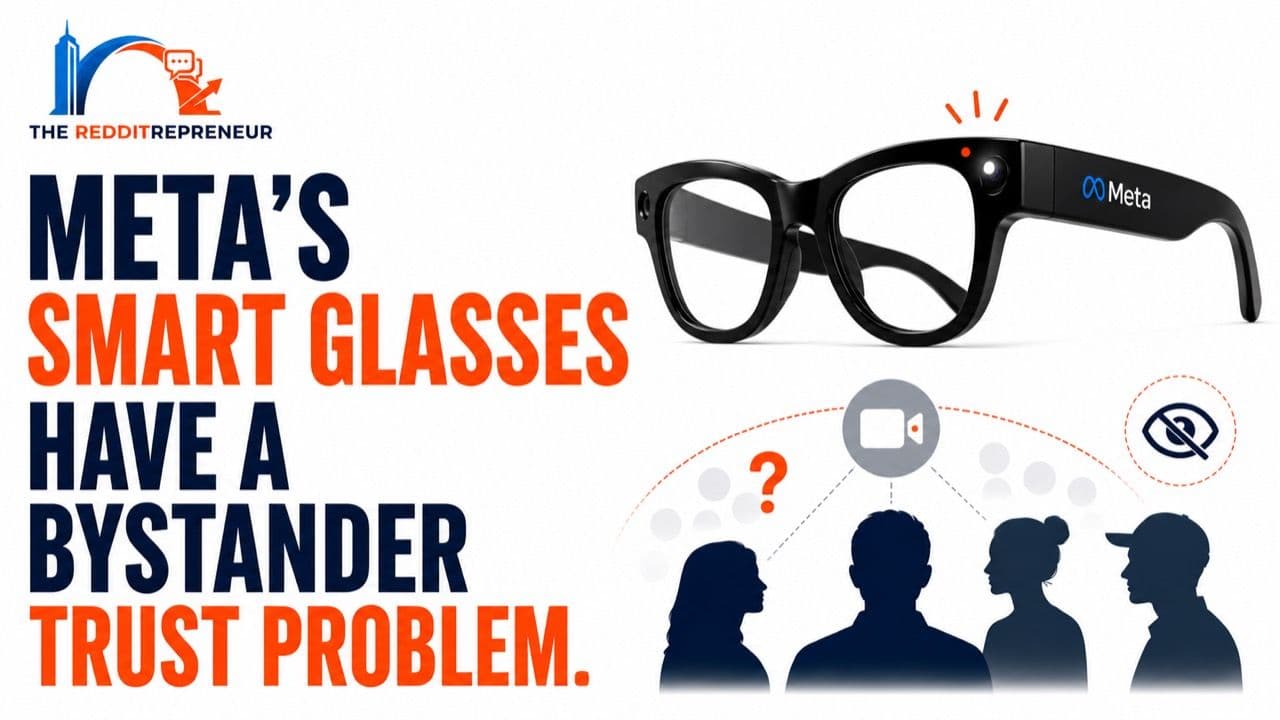
Meta's smart glasses can take photos, record videos and use AI while looking like a normal pair of glasses.
That is what makes them useful.
It is also what is making some people uncomfortable.
The biggest question is not whether people want to buy them.
It is whether everyone around them feels comfortable being near someone wearing them.
This Is Different From Using a Phone
When someone holds up a phone, you normally know they are recording.
With smart glasses, it is much harder to tell.
Many people may not even realise the glasses have a camera.
Meta says a white capture light shows when the glasses take a photo or record video.
But people still need to notice the light and understand what it means.
That changes how people feel in public places.
People may wonder:
- Am I being recorded?
- Is AI listening?
- Can someone save this without asking me?
Those questions affect trust.
The People Who Never Bought the Product
Most companies focus on their customers.
But Meta has another group to think about.
Everyone who stands near someone wearing the glasses is also affected.
That includes:
- Friends
- Families
- Restaurant workers
- Shop staff
- Children
- People on public transport
- People walking down the street
None of these people chose to use the product.
But they are still affected by it.
The Bystander Trust Gap
This creates something I call the Bystander Trust Gap.
The Bystander Trust Gap is the difference between how safe the glasses feel to the person wearing them and how safe they feel to everyone else.
Someone wearing the glasses may feel completely comfortable.
Someone nearby may feel worried about being recorded.
That difference matters.
The Bystander Trust Gap
The difference between how safe a product feels to the person using it and how safe it feels to the people around them.
Person wears product → People nearby notice it → Trust is formed → Community opinion spreads
Why Moderation Does Not Solve Everything
Instagram has removed accounts that posted videos filmed with Meta smart glasses which harassed people.
That is a useful step.
But moderation happens after something has already happened.
If someone feels uncomfortable because they think they are being recorded, removing the video later does not remove that feeling.
Building trust means preventing problems before they happen.
Why Community Opinion Matters
Products are not judged only by reviews.
They are judged by conversations.
If enough people start describing smart glasses as:
- Creepy
- Invasive
- Surveillance devices
- A privacy risk
those ideas can become part of the product's reputation.
That reputation can spread much faster than advertising.
What Meta Should Watch
Instead of only measuring sales, Meta should also understand what communities are saying.
Important questions include:
- Do people trust the glasses?
- Are businesses starting to ban them?
- Are people changing how they behave around them?
- Are more people talking about privacy than useful features?
- Are negative conversations growing?
Those signals can help predict future problems.
The Bigger Lesson
Every new technology changes how people behave.
But successful products also need social acceptance.
People have to feel comfortable using them.
Everyone around them has to feel comfortable too.
That is why Community Intelligence matters.
Listening to communities early helps companies understand concerns before they become bigger problems.
Final Thought
The future of smart glasses will not only depend on better cameras or better AI.
It will also depend on trust.
If people around the product do not feel comfortable, that can slow adoption no matter how good the technology becomes.
Companies often measure what customers think.
The smarter question is:
What does everyone else think?
Editor's Note
Wearable AI products are creating a new challenge for businesses because they affect both customers and the people around them. Understanding both groups is becoming increasingly important.
Sources
- Meta, how its AI glasses capture photos and videos and use the capture light.
- PetaPixel, Instagram's response to harassing videos filmed with Meta smart glasses.
Understand What Communities Really Think
A Community Intelligence Audit helps businesses understand what customers and online communities are really saying before it becomes a bigger problem.